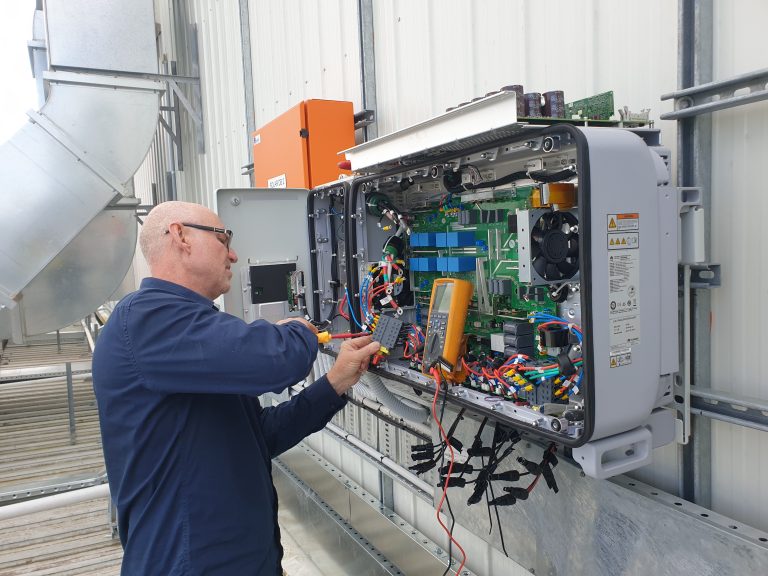
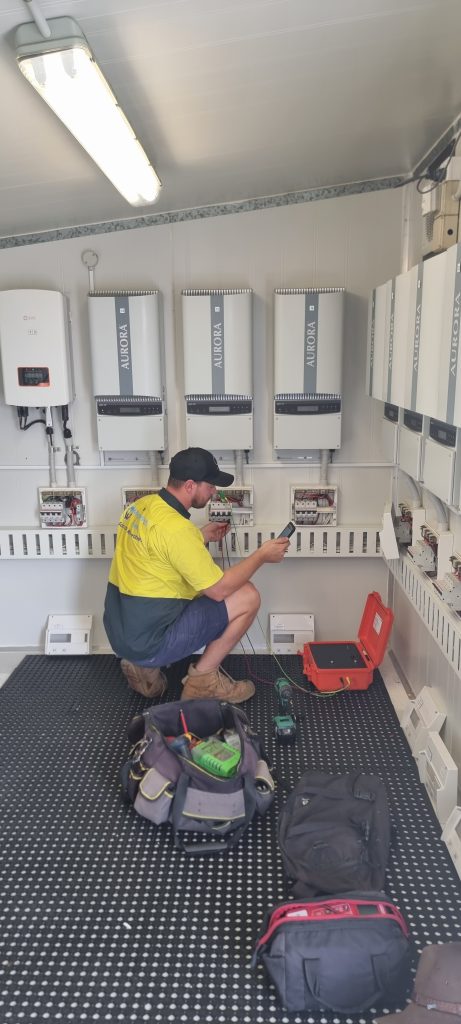
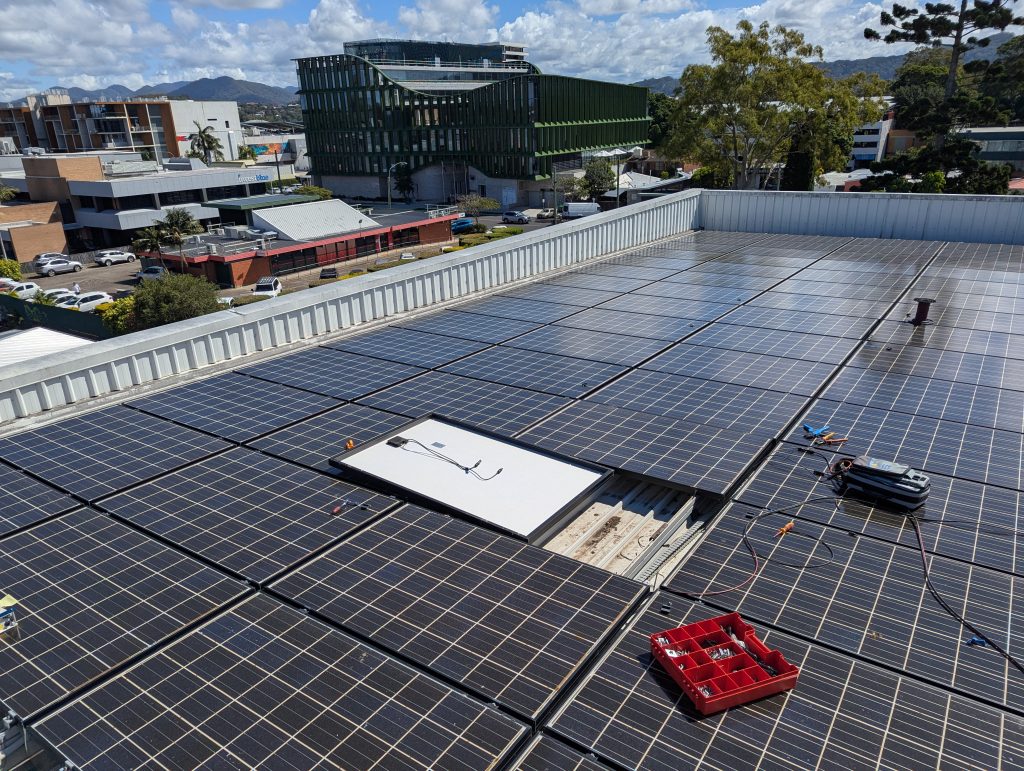
I-V curve testing is the preferred method for commissioning, O&M, and troubleshooting of PV arrays because it provides the most complete and accurate performance measurement possible.
For each string, we can measures the I-V (current vs. voltage) and P-V (power vs. voltage) curves.
The measured results are compared to the expected performance, taking into account the irradiance and module cell temperature at the time of the I-V measurement.
Mega Watt Power can provide unprecedented measurement throughput and accuracy while delivering deep insight into the performance of your arrays.
To address a malfunctioning solar system, start by visually inspecting the inverter’s display for fault codes, ensure that the isolator switches are activated and that the breakers have not tripped and look for any debris that may be blocking the inverter’s vents,
Utilise your monitoring app to compare the current performance with historical data; a significant decline may suggest an underlying issue.
Next, if you are able to safely access your roof, visually inspect the panels, frames, and fittings for any signs of damage for loose, chewed or burnt connections.
If your system is still not working please use the contact button at the bottom or this page and our service team will arrange for one our technicians for a site inspection.
Measuring string series resistances with the Emazys Z300 PVT we were able to quickly identify 1 faulty Kyocera panel out of 640.
System was installed in 2010.
.
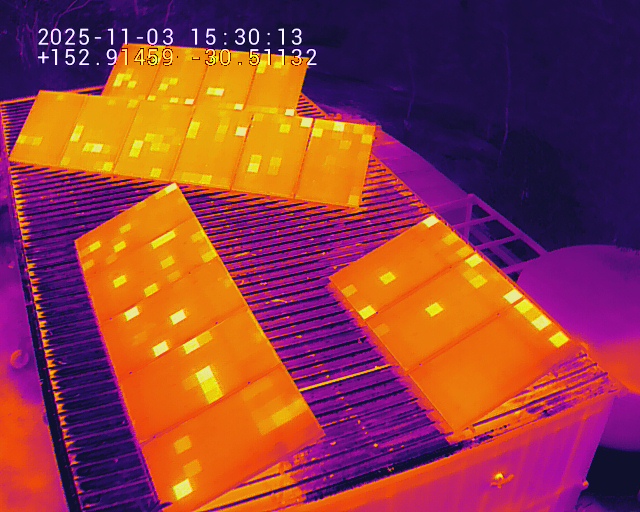
Thermal imaging with a drone enables identifying hail damage to solar panels by spotting hot spots or areas with inconsistent temperatures, which may suggest physical issues such as micro-cracks or cell failure.
This non-invasive technique enables quick, safe, and efficient inspections of extensive solar arrays, allowing for the precise identification of panels that need replacement.
The system information gathered, alongside thermal and visual images, aids in maintenance planning and serves as valuable evidence for insurance claims.
Think About a Professional Drone Inspection: At Mega Watt Power we provide thermal drone inspections to locate and document any damage.
Review Your Insurance Policy: Reach out to your insurance provider to clarify your coverage and understand the claims process.
Utilise Weather Reports as Evidence: Reports from the Bureau of Meteorology (BOM) on hailstorms can serve as proof of severe weather in your region, which is beneficial for insurance claims.
Keep Thorough Documentation: Capture photos and maintain records of all communication with your insurance company.
Testing solar panels is often overlooked as an unnecessary procedure. At Mega Watt Power, we understand the value of ensuring your solar panels are producing at their maximum energy output.
Our technicians are equipped with all the accredited and calibrated equipment to confirm the efficiency of your solar panels.
We can identify which panels are not operating at their maximum performance and pinpoint panels that may have fault issues. If you suspect that your solar panels aren’t generating as much electricity as they should—solar array testing can diagnose the issue in no time!
Most grid connected inverters have an alarm which appears as an earth leakage. This can be triggered due to one of the cables being chewed by birds or animals. this alarm can also appear due to the connectors that link the panels together failing.
These are just a few factors that can contribute to the decrease in energy efficiency from your solar system.
As it is sometimes very hard to see under the panels it is faster to test the array with special equipment to verify.
If you live in an area that has a lot of dust/salt spray or sap falling from nearby trees on your solar array it is best to use a soft brush and normal water to clean. If the sap is very heavy then you may need a very mild cleaner to breakdown the sap.
If your panels have a build up of sap on them, you may need to use a biodegradable cleaning product to help break down the sap and to clean the panels.
Corrosive cleaning products should never be used and it is always best to check with your installer to see if they can recommend a cleaning product to use.
After cleaning with any product you will need to make sure the panels have been thoroughly rinsed to remove any residue.
Some people collect the water from their roofs for drinking. When cleaning your panels it is always best to open the down pipes so the water from cleaning does not go into your drinking water.
As you can see from the image above, there is a silicone sealant which is embedded into the aluminium frame.
In some cheaper manufactured solar panels this sealant over time can become brittle and crack and if you use a high presser water cleaner it can push the water in through these cracks to the copper ribbon and bus bar which will then corode and cause hot spots within the panel, then causing them to fail.
The use of a telescopic reach cleaning pole with a soft brush (image bellow) is the best way of cleaning your solar panels. We never recommend that you attempt to get on your roof an do this yourself. It is always best to us a professional solar cleaning company to do this maintenance.